Change Your Browser
You´re using a web browser that isn´t supported by this site. To get a better experience, please use another browser of your choice.

- About us
- Our offers
- Press
- Work with us
- Transformation Partners
- Startup Collaborations
Part of the network? Learn more about our community platform:
- Combient Twin
Already a Twin user?
- Login to Twin
News
What if your toughest competitor is the version of your business you haven’t become yet?
A Reinvention Lab is a high‑intensity, half‑day session co‑developed with PwC for C‑level teams feeling the heat from AI, climate demands, tariffs, and fragile supply chains. Instead of tweaking today’s plan, leaders step into a “killer competitor” scenario – like Nefab’s now‑famous “Killer Workshop” – and design the rival that could beat them at their own game. In just a few hours, they pressure‑test their strategy, decide what truly matters (and what to stop), and walk away with sharp future scenarios, AI‑driven disruption insights, and a clear roadmap for what to focus on next. As a Combient Associated Company, you can book a Reinvention Lab for your own leadership team.
Across the Combient network, many leadership teams are starting to feel the same pressure points: climate targets, AI, tariffs, and supply‑chain shocks are no longer edge cases. They are reshaping margins, customer expectations, and entire value chains. At some point, the question shifts from “How do we optimize what we have?” to “When do we reinvent the way we create and capture value?” That shift is exactly what PwC’s global Business Model Reinvention (BMR) research focuses on: how structural disruptions are redefining where and how value is created.
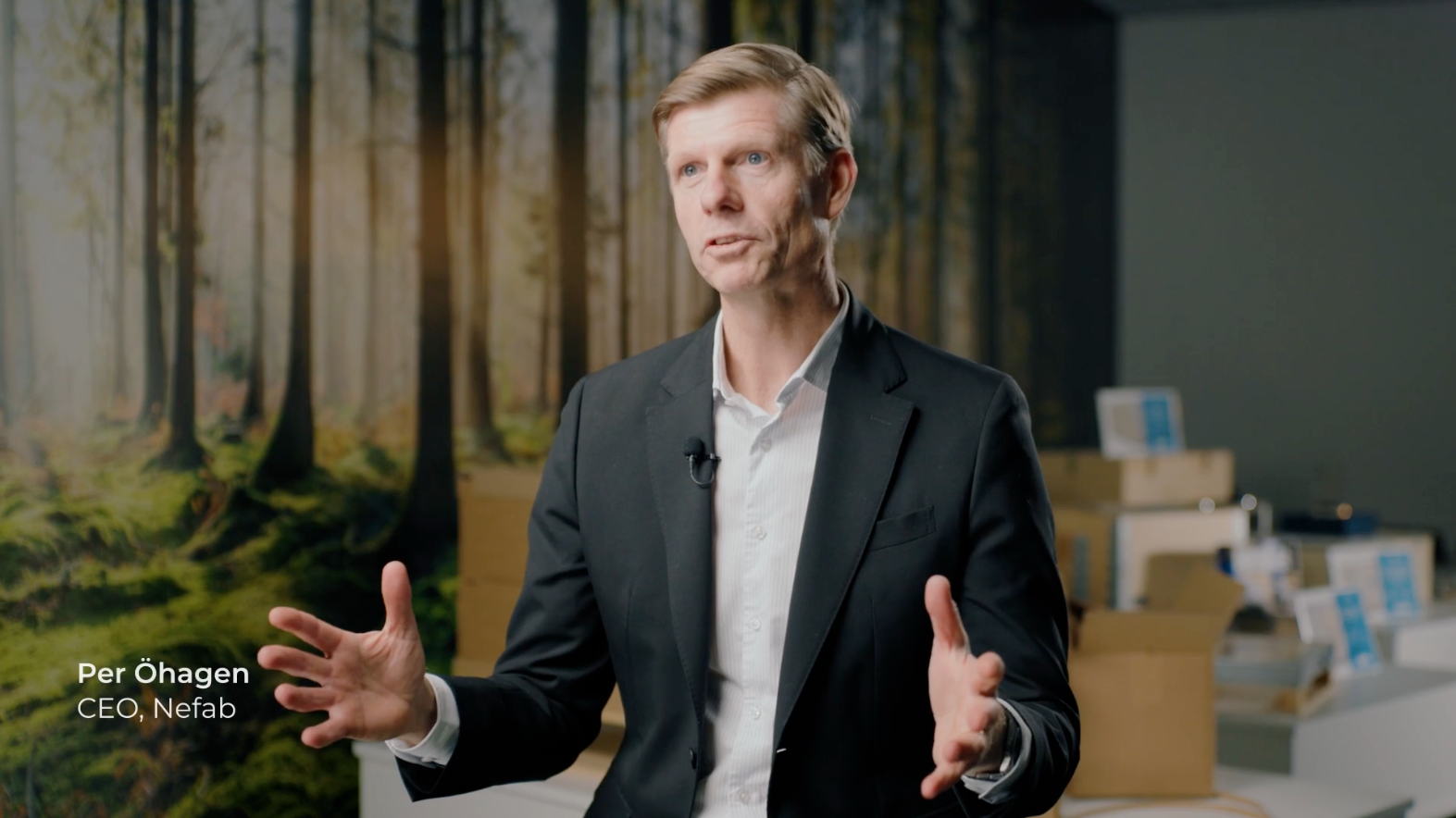
Nefab – a global leader in sustainable packaging and logistics – immediately seized the opportunity to become Combient’s “Global Client Zero” for Business Model Reinvention. In what became known as the “Killer Workshop,” CEO Per Öhagen and his leadership team explored the hypothetical company that would “kill Nefab” – and walked away with a focused roadmap and an operating model designed to future‑proof the business.
The Reinvention Lab: A Practical Entry Point for the Network
Building on Nefab’s experience and PwC’s global BMR work, Combient and PwC have co‑designed the Reinvention Lab – a practical, high‑impact starting point for companies that want to explore reinvention without launching a full multi‑month program from day one.
Leadership teams walk away with:
- Scenario‑based views of their future operating environment, tailored to their business
- AI‑supported insights into the disruptions and trends most likely to affect them
- A prioritized roadmap
Join a Reinvention Lab
For Combient’s Associated Companies, the Reinvention Lab is intentionally designed as a low‑friction first step – a way to explore your own “innovation imperative,” test your strategy, and mobilize your leadership team around a sharper, more resilient business model.
We are now welcoming companies to the Reinvention Lab at no cost.
To explore how your company can secure a slot for your leadership team:
- Reach out to your Combient Relationship Manager
- Contact Lucy Huo, Digital Strategy Director
In the video below, Scott Bailey (PwC Sweden), Per Öhagen (CEO, Nefab), Torgny Gunnarsson (Deputy CEO, Combient), and Lucy Huo (Digital Strategy Director, Combient) explain why reinvention has become critical for businesses, how the “Fiercest Competitor” – or “Killer” – workshop works, and what leadership teams walk away with after the session.
Nefab as Global Client Zero
Having already pushed hard on growth and strategy, Nefab saw that its business model was being tested by rising competition, shifting customer expectations, and challenges in scaling recurring, long‑term value. At the same time, four global trends – sustainability, electrification, resilience, and digitalization – were reshaping the landscape and accelerating demand for circular, regional, and data‑driven solutions.
At the Combient Conference in March 2026, CEO Per Öhagen shared how these dynamics sharpened the case for reinvention – and why the company chose to work with Combient and PwC Sweden to pressure‑test its strategy and operating model.
Reflecting on why Nefab chose to engage, Per put it simply:
We saw this as an important opportunity to pressure‑test our strategy, get an outside‑in view of our priorities, and turn our growth ambitions into a clear, actionable plan. — Per Öhagen, CEO, Nefab
For Combient, Nefab’s journey also confirmed that Combient’s insight into Associated Companies’ needs – paired with PwC’s global BMR frameworks and the network’s collaborative model – can be scaled into a repeatable approach to reinvention for the entire Combient network. As Scott Bailey noted:
From day one, we set out to create something repeatable. We drew on hundreds of reinvention journeys PwC has led globally, proved the approach in reality with Nefab, and ended up with tools and methods that any company in the Combient network can now use. — Scott Bailey, Partner, PwC Consulting
The Killer Workshop
To navigate this shift, Nefab partnered with Combient and PwC Sweden to pressure‑test its strategy and design a structured reinvention program built on outside‑in analysis, inside‑out assessment, and leadership workshops.
A defining moment was the “Fiercest Competitor Workshop” – internally renamed the “Killer Workshop” – where leaders designed the hypothetical company that would “kill Nefab.” By imagining their own disruption, they exposed critical vulnerabilities and clarified which unique capabilities could be scaled into integrated, hard‑to‑copy offerings.
The BMR diagnostic went beyond analysis to create a mandate for change and a tangible roadmap from today’s business to tomorrow’s model. Three insights stood out:
- From Fragmentation to Focus
- From Transactions to Integrated Solutions
- From Concept to Execution
The result was a focused roadmap. We have equipped our organization, and we have an operating model that has allowed us to scale and to really future‑proof the company. — Per Öhagen, CEO, Nefab
Why Reinvention is Now a Strategic Imperative
While these pressures show up differently in each company, they all point to the same reality: leaders must bridge a growing gap between volatile near‑term shocks and long‑term structural shifts. From AI‑driven technology disruption to the complexities of climate change, geopolitical tension, and a fracturing world order, the mandate is clear: secure immediate resilience without losing sight of the forces that will define the next decade.
BMR research describes this convergence as an “innovation imperative” driven by three reinforcing forces:
- AI‑Fueled Productivity: Moving beyond digitization to fundamentally rethink business models through machine intelligence.
- Climate Constraints: Turning decarbonization into a core value proposition and cost strategy.
- Shifting Value Pools: Leveraging new technologies to lower transaction costs and foster cross‑sector collaboration.
Ultimately, Business Model Reinvention is no longer a choice. It’s the urgent discipline of spotting where future value lies and building the resilience to capture it before the world moves on without you.
When to Take Reinvention Seriously
How do you know when incremental improvement is no longer enough? Several recurring signals suggest that a company must transition from optimization to BMR:
- External Shifts: Technology, customer habits, or regulations move faster than your ability to react.
- Diminishing Returns: You’re losing market share or profit despite following a “proven” strategy.
- Systemic Barriers: Your current operating model actively chokes off new innovation.
When these signals start to appear together, it’s usually a sign that optimization has reached its limits and that a structured Business Model Reinvention effort is required.
At its core, BMR is about connectivity. It’s the bridge between high‑level theory and gritty execution. It forces a reconciliation of your Why (purpose), What (value proposition), and How (delivery).
In the end, the real risk isn’t disruption itself, but waiting too long to reinvent a business model that was built for a different world.
Combient Group
Get in touch